Embroidery suits running hats with a bold, simple logo that should look like premium team kit, while heat-transfer print suits detailed, multi-color artwork and keeps the cap lighter and flatter. Custom Running Hats offers both on its performance caps, shows your logo in the method you pick on a free mockup within 24 hours, and recommends the switch when your artwork fits the other method better.
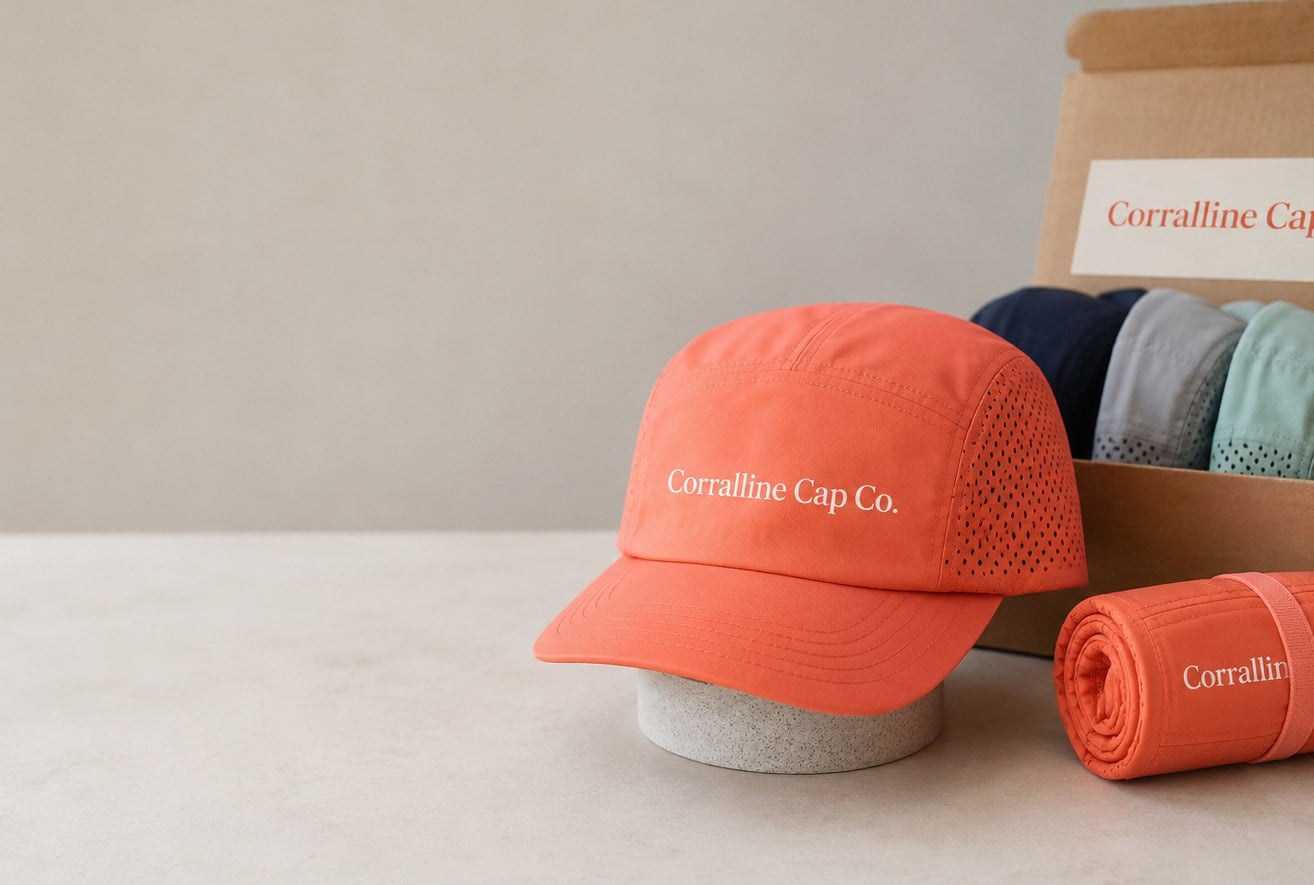
- Two logo methods on running hats: embroidery and heat-transfer print
- Embroidery reads as premium and textured; print handles gradients, fine detail and many colors
- Print sits thin and flexible, which suits mesh-panel and lightweight caps
- Free mockup within 24 hours, unlimited free revisions, pay nothing until you approve
- Minimum order 12, standard turnaround about 2 weeks
What is the difference between embroidered and printed logos on running hats?
An embroidered logo on running hats is stitched into the front panel with thread, so it has raised texture and a woven look. A heat-transfer printed logo is a thin, flexible film bonded to the fabric with heat and pressure, so it sits nearly flat and can carry fine lines, gradients and many colors. Both methods are available from Custom Running Hats on its moisture-wicking polyester caps.
The two methods solve different problems. Embroidery gives a cap the feel of official team kit and works best when the logo is a bold mark with a few solid colors. Print gives you photographic freedom: a race map, a sunrise gradient, a sponsor row with small type, or a club crest full of detail that thread would blur.
Neither method changes what makes a cap a running cap. The fabric, the sweatband, the vented panels and the closure stay the same; only the way your artwork is applied differs. That means the choice comes down to your logo, the style of cap and how the hats will be used, which the rest of this guide walks through.
Embroidery vs heat-transfer print: how do they compare side by side?
Embroidery wins on texture and the premium look; heat-transfer print wins on detail, color range and weight. The table below compares the two logo methods on the factors that matter most for running hats, so you can match the method to your artwork and your runners rather than defaulting to whatever you ordered for office caps.
| Factor | Embroidery | Heat-transfer print |
|---|---|---|
| Look and feel | Raised, textured, classic team-kit finish | Smooth and nearly flat, modern and technical |
| Artwork detail | Best for bold shapes and clear lettering | Handles fine lines, small type and gradients |
| Color range | A limited set of solid thread colors | Full color, including photographic artwork |
| Weight and flex | Adds some stiffness and backing to the panel | Thin and flexible, barely noticeable on the head |
| Mesh and lightweight panels | Best kept to solid front panels | Suits lightweight fabrics and side panels |
| Best for | Run club crests, brand logos, retail caps | Race artwork, sponsor marks, detailed or multi-color designs |
If your logo appears in both columns’ sweet spots, you have a genuine choice, and the free mockup is the fastest way to decide. Custom Running Hats can show the same artwork both ways so you compare them before committing.
Which logo method holds up better to sweat and repeated washing?
Both embroidered and heat-transfer logos hold up to the sweat and washing that running hats face, but they wear differently. Embroidery is very hard to damage because the thread is part of the panel; over many washes it may soften or fuzz slightly at the edges. A well-applied heat transfer stays bonded and flexible, but high heat from a dryer or an iron is its main enemy.
Runners put a cap through more than an office hat ever sees: salt from sweat, sunscreen, rain, and frequent washing. Because Custom Running Hats only decorates performance polyester and mesh rather than cotton, both methods are applied to fabric that dries quickly and keeps its shape, which helps the logo stay crisp.
- Embroidery: tolerant of rough handling and being stuffed in a gym bag; the thread can catch on velcro or zips.
- Heat-transfer print: flexes with the fabric; keep it out of the dryer and away from direct ironing.
- Both: hand wash or a gentle cold cycle, then air dry, will keep any running hat looking new the longest.
For caps that will be worn several times a week for years, such as run club or retail caps, embroidery is the low-maintenance pick. For race caps worn on race day and on weekend runs afterward, a heat transfer more than keeps pace.
Does an embroidered logo make a running hat heavier or hotter?
An embroidered logo makes a running hat slightly stiffer and a little heavier at the front panel, because the stitching needs a backing behind it. On a short run most people never notice. On long runs in heat, or on ultralight and mesh-panel caps, a heat-transfer print keeps the cap closer to its natural weight and breathability.
This matters most for the performance running caps that are designed to feel like nothing on the head. A large embroidered logo covers more of the front panel with thread and backing, which can trap a little warmth where the forehead sweats most. A heat transfer covers the same area with a thin film that bends with the fabric.
Placement also changes the equation. Small embroidered marks on the side or back add very little stiffness, while a big front logo adds the most. If your runners train in hot climates, consider keeping the front logo compact in embroidery or moving to print for a wider design.
For cooler-weather and everyday caps, the premium feel of embroidery usually outweighs the small weight difference, and many runners prefer the structured look it gives the front of the cap.
Which logo method is best for race caps, run clubs and running brands?
Heat-transfer print is usually best for race caps, embroidery is usually best for run club and brand caps, and mixed designs suit sponsored teams. The right answer depends on how detailed the artwork is and how long the cap is meant to last in rotation, so here is how the three most common buyers of running hats tend to decide.
Race and event caps
Race artwork often includes the event name, the distance, the year, a course graphic and a row of sponsor logos. That level of detail is where print shines. Race and event caps with a heat transfer keep small sponsor marks legible and let the design match the medal and the bib.
Run club and team caps
A club crest or wordmark worn every week benefits from embroidery’s durability and its look of official kit. Run club and team caps with a stitched front logo read as a uniform, which is the point when the group meets in a crowded park.
Running shops and brands
Retail buyers often split the range: an embroidered core cap that never changes and printed seasonal or limited designs. That mix keeps the shelf fresh without diluting the brand mark.
Can embroidery and print be combined on the same running hat?
Running hats can often pair an embroidered front logo with a printed detail elsewhere on the cap, such as a race year, a distance, a sponsor or a short motto on the side or back. Custom Running Hats confirms which combinations work on your chosen cap style and shows every position on the free mockup before anything is produced.
A combined design gives you the best of both methods. The main logo carries the premium, textured finish, while the secondary text stays thin and light so it never competes with the front. This is a common approach for corporate run teams, where the company logo is stitched and the event or challenge name is printed.
Keep the hierarchy clear when you plan a combined cap:
- One hero logo on the front panel, in the method that suits its detail.
- Secondary marks smaller and on the side or back, so the front stays uncluttered.
- Colors matched across both methods so the stitched and printed elements look like one design.
Mention a combined design on the quote form and include every piece of artwork, so the mockup arrives complete.
How do you choose a logo method if you are still unsure?
The simplest way to choose between embroidered and printed running hats is to send your logo and let the mockup decide. Custom Running Hats returns a free mockup within 24 hours, offers unlimited free revisions, and you pay nothing until the design is approved, so seeing your artwork both ways costs nothing but a day.
- Send your best file. A vector logo is ideal; a high-resolution image works for print.
- Tell us how the caps will be used. Race day, weekly club runs, retail or staff wellness all point toward different methods.
- Pick your cap style. Performance, mesh, reflective dawn and dusk or ponytail and open-back builds each have their own panels and placement options.
- Compare the mockups. Ask for both methods if you cannot decide, then approve the one that looks right.
- Production begins. Standard orders ship in about 2 weeks, with faster turnaround available through express shipping.
A quick rule of thumb: if your logo still reads clearly when shrunk to a thumbnail and uses only a few flat colors, embroidery will look great. If it relies on gradients, small type or many colors, choose print. The full order process is laid out on the how it works page.
Frequently asked questions
Will a heat-transfer logo crack or peel on running hats?
A heat-transfer logo on running hats is bonded to the polyester with heat and pressure, so it flexes with the fabric rather than cracking during normal wear. Peeling usually traces back to high heat after the fact, such as tumble drying or ironing directly over the design. Hand washing or a cold gentle cycle followed by air drying keeps the transfer firmly attached for a long time.
Can embroidery reproduce a gradient or photo-style logo on a running hat?
Embroidery on a running hat cannot reproduce true gradients or photographic artwork, because thread comes in solid colors and blends only in coarse steps. A logo with a sunrise fade, a course photo or soft shading will look much closer to the original as a heat-transfer print. Custom Running Hats will flag this on your free mockup and suggest print where it fits better.
How small can lettering be on an embroidered running hat?
Lettering on an embroidered running hat needs to be noticeably larger and simpler than lettering in a printed design, because thin strokes and tight counters fill in with thread. Sponsor rows, taglines and fine serif fonts often blur when stitched small. Custom Running Hats checks legibility on the free mockup and will recommend enlarging the text or moving that element to print.
Can a printed logo go on the mesh panels of a running hat?
A printed logo is usually the better match for the lighter side and back areas of a running hat, because a heat transfer stays thin and flexible on lightweight fabric. Open mesh itself offers little surface for any logo, so most designs sit on the solid front or side panels. Your mockup from Custom Running Hats shows exactly where artwork can go on the chosen style.
Which logo method works best on ponytail and open-back running hats?
Ponytail and open-back running hats carry the main logo on the front panel, so either embroidery or heat-transfer print works well there. Because the back is cut away for hair, any secondary text typically moves to the side panels, where a slim printed detail sits neatly. Custom Running Hats lays out each position on the free mockup so nothing lands on the opening.
What washing routine keeps a custom logo looking new on running hats?
Running hats keep their logos sharpest with a hand wash or cold gentle cycle using mild detergent, followed by air drying with the crown reshaped. Skip bleach, fabric softener and the dryer, and never iron over a heat transfer. Embroidery tolerates rougher handling, but keeping it away from velcro and zips in the wash prevents snagged threads.
Does the logo method change how long running hats take to produce?
Custom running hats in either embroidery or heat-transfer print follow the same order path: a free mockup within 24 hours, unlimited free revisions, then standard production and delivery in about 2 weeks. Faster turnaround is available with express shipping when a race or kickoff is close. Mention your date on the quote form so Custom Running Hats can plan around it.
Can I switch from print to embroidery after seeing my running hat mockup?
Switching logo methods on your running hat mockup is simple, because revisions are unlimited and free until you approve the design. Ask for the alternate version and Custom Running Hats will redraw the artwork in the other method, adjusting thread colors or simplifying detail where needed. Nothing is paid and nothing goes into production until you sign off.
Which logo method looks best on white or light-colored running hats?
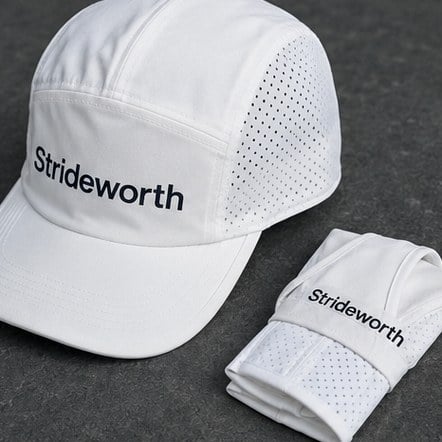
White and light-colored running hats show both methods well, but contrast matters more than method. Dark thread embroidery gives a crisp, classic look on a white cap, while a full-color heat transfer lets bright artwork pop without needing a thick outline. Very pale logo colors can disappear on light caps either way, so check contrast on the mockup before approving.
Can a club crest be embroidered while sponsor logos are printed on the same running hats?
Running hats can carry an embroidered club crest on the front and smaller printed sponsor marks on the side or back, which keeps the main logo premium while fine sponsor detail stays legible. Send every logo with your quote request and Custom Running Hats will place them on the free mockup, confirming which positions and methods suit the cap style you chose.
Do embroidered and printed running hats need different artwork files?
Embroidered and printed running hats both start best from a vector logo such as AI, EPS, PDF or SVG. Print can also work from a high-resolution image, while embroidery needs clean shapes because the file is converted into stitch paths. If you only have a low-resolution logo, send it anyway and the mockup team will advise on what can be recreated.
Get a free mockup for your running hats
Send your logo or idea and the quantity you have in mind. Custom Running Hats returns a free mockup within 24 hours, you approve the design before anything is produced, and standard turnaround is about two weeks with faster options available. Get a custom quote.